Big Brother Beanie Ghost Print Review
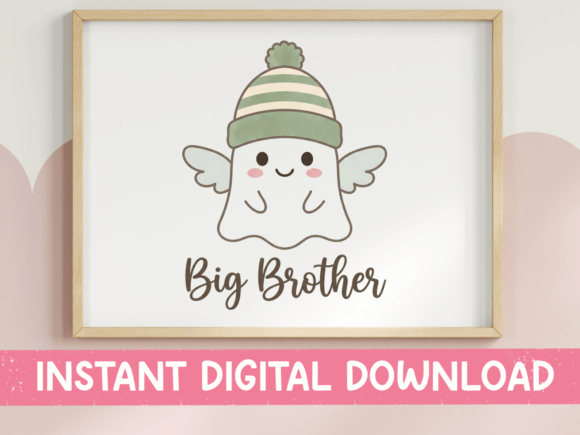
When I first opened the Big Brother Beanie Ghost Print, my immediate reaction wasn't about the file format or stitch count, but rather the distinct personality it exudes. As a designer who spends hours evaluating embroidery files for client projects and my own small shop, I look for that specific spark where a digital graphic transforms into a tactile treasure. This design frames a tiny smiling ghost with fairy wings, wearing a striped green beanie, with "Big Brother" hand-lettered in flowing script beneath him. He looks ready to introduce a new sibling, which is a powerful emotional hook. It feels less like a generic Halloween clipart and more like a bespoke illustration meant for a cherished family moment.
The First Impression: Mood and Visual Personality
The visual weight of this piece is surprisingly light yet balanced. The combination of the whimsical fairy wings and the cozy striped beanie creates a unique juxtaposition that works perfectly for modern, soft aesthetics. Unlike many traditional Halloween designs that rely on spooky fonts or jagged edges, Big Brother Beanie Ghost Print leans into warmth and cuteness. The flowing script of the text suggests elegance, while the ghost itself adds a playful, approachable character. This mood makes it an ideal candidate for nursery decor, baby shower gifts, or autumn-themed boutique collections. It avoids the "scary" trope entirely, focusing instead on the joy of family expansion during the fall season.
Real-World Application: From Screen to Stitch
I recently considered using this design for a custom embroidered tote bag project intended as a gift for a friend expecting her second child. The scenario required a design that could withstand frequent washing, hold up against the canvas texture of a tote, and still look crisp when viewed from a distance. Here is how Big Brother Beanie Ghost Print performed in my mental simulation of the stitching process.
The layout naturally guides the eye from the character down to the text. For a tote bag, placing the ghost centered on the front panel would create a focal point that invites conversation. The "Big Brother" script needs careful attention; if the lettering is too thin, it might disappear into the weave of the fabric. However, assuming the digitization uses adequate satin stitch density, the script should pop beautifully against a neutral background. I also imagined applying this to a sweatshirt embroidery project for a toddler. The softness of the ghost's expression would pair wonderfully with fleece, creating a product that feels premium and thoughtful.
For Etsy sellers and craft business owners, this design offers versatility beyond just apparel. Imagine a set of matching kitchen towels or pillow covers featuring this motif. The striped beanie provides a natural color palette guide—greens, whites, and perhaps a touch of orange or black for contrast. This allows you to coordinate thread colors easily, ensuring the finished product looks cohesive and professionally branded.
Technical Considerations and Fabric Challenges
While the design has charm, practical experience dictates that we must look at where it might struggle. The primary concern lies in the delicate details of the fairy wings and the fine lines of the hand-lettering. If you attempt to embroider this on a small hoop size, such as those used for caps or hat patches, the resolution might suffer. Tiny details often get lost when the fabric is pulled tight around a curved surface like a baseball cap. In these cases, the wings might merge into a single blob, and the script could become illegible.
Textured fabrics present another hurdle. If you are working with thick chenille or heavy corduroy, the stabilizer choice becomes critical. Without proper backing, the dense fill stitches of the beanie stripes could cause puckering, distorting the face of the ghost. Similarly, stretchy fabrics like jersey require a strong tear-away or cut-away stabilizer to prevent the design from warping during wear. Dark fabrics will demand a high-quality underlay and potentially a jump-stitch reduction to ensure the colors don't bleed into each other, especially if you are using light-colored threads for the ghost against a dark background.
Where to Exercise Caution
- Small Hoop Sizes: Avoid using this on items smaller than 4x4 inches unless you verify the digitizer has simplified the wing details.
- Thin Fabrics: Delicate silks or sheer materials may not support the density of the fill stitches without tearing.
- Dense Stitch Areas: The beanie stripes require careful density management to avoid a stiff, board-like feel.
- Frequent Washing: For items like aprons or tea towels that see heavy use, ensure the thread colors are colorfast to maintain the integrity of the finished product.
Impact on Product Value and Brand Consistency
In the world of handmade products, the perceived value is directly tied to the execution of the design. A well-executed Big Brother Beanie Ghost Print elevates a simple t-shirt or tote bag into a keepsake. Customers buying personalized gifts are looking for sentimentality, and this design delivers that narrative instantly. The "Big Brother" text acts as a badge of honor for the child, making the item highly giftable and recognizable.
For commercial embroidery projects, consistency is key. If you are building a brand around seasonal family themes, having a design like this ensures your product line remains cohesive. It signals to buyers that you understand current trends and can deliver high-quality, emotionally resonant graphics. When presented in a printable mockup, the clean lines and friendly character suggest professionalism, which builds trust with potential buyers browsing an online store.
Practical Designer Notes for Implementation
Before committing to a production run or a personal project, there are several steps every experienced designer takes. First, always test the design on scrap fabric that matches your final material. This helps you visualize the thread color contrast and check for any unintended gaps in the satin stitches. I recommend running a test in black and white mockups to ensure the shape holds up even without color, confirming that the silhouette of the ghost and the flow of the script remain distinct.
Review the stitch density carefully. If the fill stitch is too dense, the fabric will pucker; if it is too sparse, the design will look patchy. Confirm the hoop size requirements before starting, and inspect small details like the tips of the wings to ensure they won't snag or break. If you plan to sell finished items, double-check the licensing terms provided by the creator to ensure you have the right to use this embroidery file for commercial purposes. Whether you are creating a custom apparel line, a holiday gift collection, or a boutique branding asset, taking these precautions ensures your Big Brother Beanie Ghost Print project turns out exactly as envisioned.
Ultimately, this design is a strong addition to any machine embroidery design library. It balances technical feasibility with artistic appeal, making it suitable for everything from baby clothes to adult-sized hoodies. By paying attention to fabric selection and stabilization, you can transform this digital graphic into a stunning physical reality that customers will love.