Fighter Jet Shirt, American Flag 4th of Review
I have spent years reviewing digital assets for my own embroidery business and the clients I consult with. When a file arrives with a title like Fighter Jet Shirt, American Flag 4th of, my first instinct is not to look at the pixels, but to visualize the needle movement. As an experienced designer, I know that a pretty image does not always translate into a clean stitch-out. This review focuses on how this specific design performs when moved from a screen to a real-world project, specifically looking at its viability for commercial use, custom gifts, and small business merchandise.
The First Impression: Mood and Visual Personality
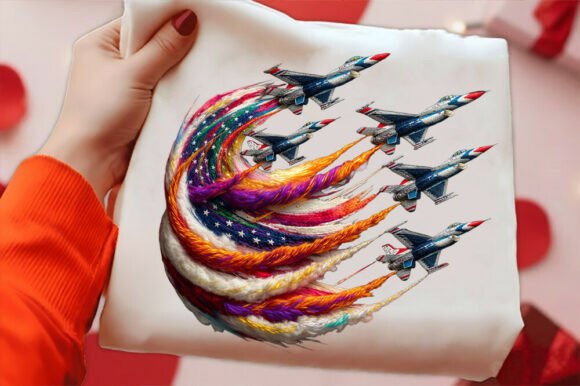
The moment you open the file associated with Fighter Jet Shirt, American Flag 4th of, the patriotic energy is immediate. It is not subtle; it is bold, angular, and highly graphic. The concept of merging a fighter jet silhouette with the American flag creates a dynamic composition that screams "strength" and "celebration." For a designer looking to create a statement piece, this is exactly the kind of visual personality that stops a customer in their tracks.
In terms of layout, the design feels balanced enough to sit comfortably on a chest pocket or centered on a back panel. The shapes are distinct, which is a crucial factor for any machine embroidery design. Unlike overly intricate illustrations that can turn into a muddy mess of thread, this design relies on strong lines and clear areas. It feels like a natural fit for a holiday collection, evoking feelings of pride without being cluttered. It works best when the goal is to create a high-impact finished product that customers will want to wear or display.
Real-Life Application: From Screen to Stitch
To truly evaluate this asset, I put myself in the shoes of a crafter preparing for a busy season. Imagine you are an Etsy seller gearing up for the summer holidays. You need a design that translates well across different products. Let's say you decide to create a line of custom embroidered tote bags and baby onesies featuring Fighter Jet Shirt, American Flag 4th of.
On a canvas tote bag, the sturdy fabric provides a perfect foundation. The bold nature of the design stands out beautifully against a neutral background, making it ideal for a boutique-style gift. However, moving to a sweatshirt changes the equation. While the design is striking, the density of the graphics requires careful consideration. If you are using this as a large back print on a heavy cotton hoodie, the weight of the stitches might cause the fabric to pucker if the stabilizer isn't chosen correctly.
I also considered using this for a baby item, such as a bib or a soft blanket. The sharp angles of the jet could be softened by the choice of thread colors, perhaps using softer pastels instead of standard brights. In this scenario, Fighter Jet Shirt, American Flag 4th of becomes a unique personalized gift that parents would appreciate. It transforms a standard holiday item into something memorable. Whether it ends up on a kitchen towel, a pillow cover, or a patch for a denim jacket, the versatility is there, provided the execution matches the design's intent.
Where Caution is Required
Even the most promising design has limitations. As a professional reviewer, I must highlight where Fighter Jet Shirt, American Flag 4th of might struggle. One of the biggest challenges with any graphic-heavy design is the hoop size. If you attempt to stitch this on a very small area, like a cap brim or a tiny pocket, the details may get lost or the stitching density might become too tight, causing the fabric to bunch up.
Textured fabrics present another hurdle. If you try to embroider this on a rough burlap or a fuzzy fleece, the definition of the jet and the flag stripes will suffer. Similarly, thin or stretchy materials require extra care. Without proper stabilization, the tension required for the fill stitches could distort the garment, ruining the crisp lines of the illustration. Dark fabrics are also a consideration; while they offer great contrast, you must ensure your underlay stitches are sufficient to prevent the dark fabric from showing through lighter threads.
Furthermore, if the design includes tiny lettering or extremely fine details in the corners, these areas are prone to breaking down over time, especially after frequent washing. For a commercial product that needs to last, avoiding overly dense stitch areas in small spaces is vital. Always inspect the design closely before committing to a bulk run.
Visual Appeal and Product Value
The right design elevates a handmade product. When Fighter Jet Shirt, American Flag 4th of is executed well, it adds a layer of professionalism and brand consistency to your shop. Customers trust designs that look intentional and clean. A sloppy stitch job can undermine the perceived value of even the highest quality fabric, whereas a precise application of this graphic suggests a premium finish.
This design is particularly effective for creating a cohesive brand identity. If you are selling a line of patriotic merchandise, having a signature graphic like this helps buyers recognize your work instantly. It enhances giftability because the theme is universally understood and appreciated. For an Etsy seller or a craft fair vendor, having a standout design like this can significantly boost buyer engagement and drive sales.
Practical Designer Notes for Execution
Before you send this file to your machine, there are several technical steps you must take. First, test the design on scrap fabric that mimics your final material. This allows you to check thread color contrast and see how the Fighter Jet Shirt, American Flag 4th of interacts with the texture of your cloth. Pay close attention to the stitch density; if the fill stitches are too heavy, the design will feel stiff and unprofessional.
Review the stitch types carefully. Does the design utilize satin stitch for borders? Are the fill stitches appropriate for the shape? If the file format is a digital embroidery file, ensure it is compatible with your machine software. If you are working with a raster image like a PNG (as hinted in the product description), you will need to digitize it properly to convert those pixels into usable stitches. Do not assume the file is ready to stitch immediately unless it is explicitly labeled as a machine embroidery format.
Confirm your hoop size and stabilize accordingly. Use a high-quality stabilizer to support the weight of the design, especially if you are working with larger garments. Inspect small details to ensure they won't break during the stitching process. Testing in black and white mockups can also help you understand the balance of light and dark areas before you commit to expensive thread colors.
Finally, always verify the licensing terms. Even though the product description mentions a "Print-ready" file, clarify whether you have the rights to sell finished items created with this design. Distinguishing between personal use and commercial embroidery projects is essential to avoid legal issues. By following these practical steps, you can transform Fighter Jet Shirt, American Flag 4th of from a simple graphic into a high-value component of your creative portfolio.