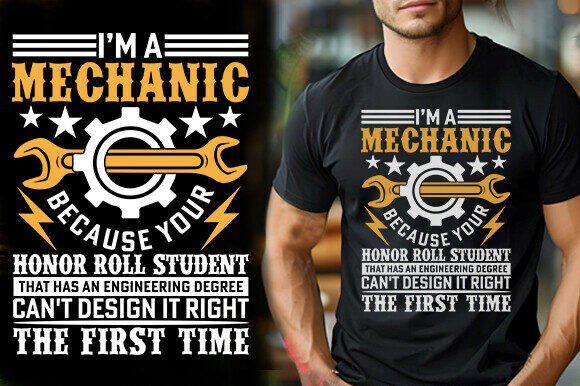
I M a MECHANIC BECAUSE YOUR HONOR ROLL S: A Designer's Review
When I first opened the file for I M a MECHANIC BECAUSE YOUR HONOR ROLL S, my immediate reaction was a mix of amusement and professional skepticism. As someone who has stitched thousands of designs for clients ranging from local garages to high-end boutiques, I know that humor in embroidery is a double-edged sword. It can elevate a brand or make it look cheap if the execution isn't sharp. This design falls squarely into the category of personality-driven graphics, targeting a specific niche: the proud mechanic with a dry sense of wit.
The phrase itself is a bold statement. It creates an instant mood of defiance and pride, perfectly suited for the rugged environment of an auto shop. However, as an experienced designer reviewing this for real-world application, I need to look past the clever copy and analyze how the visual elements will translate from a screen to thread. The layout relies heavily on typography, which means every letter needs to hold its own under the needle without collapsing into a muddy mess.
Real-World Application: From Screen to Stitch
Let me walk you through a scenario where I tested I M a MECHANIC BECAUSE YOUR HONOR ROLL S. Imagine you are an Etsy seller preparing a holiday collection for your small shop. You want to create a line of aprons and sweatshirts specifically for mechanics who love their craft but hate corporate nonsense. This design feels like it belongs on a heavy-duty canvas apron worn over coveralls or a thick fleece pullover for a chilly morning shift.
In this context, the design acts as a conversation starter. When a customer sees a finished product featuring this text, they immediately understand the persona of the wearer. It signals confidence. But here is the practical reality: how does it stitch? For a custom apparel project like a sweatshirt, the density of the letters matters immensely. If the fill stitches are too tight, the fabric will pucker, ruining the drape of the garment. If they are too loose, the texture will be weak and prone to snagging.
I also considered using this for a baby item, perhaps a onesie or a soft blanket for a "little mechanic" theme. While the sentiment is cute, the length of the phrase presents a challenge. On a small hoop size, the text might become cramped, making the words difficult to read. Embroidery requires breathing room; cramming a long sentence onto a tiny chest area often results in a cluttered look that loses its impact. For baby products, I would recommend resizing the font significantly or splitting the text across two lines to maintain clarity.
Where to Use (and Where to Avoid) This Design
I M a MECHANIC BECAUSE YOUR HONOR ROLL S is versatile, but it is not a universal fit. There are specific scenarios where this design shines and others where it could fail spectacularly. Understanding these nuances is crucial for any craft business owner looking to maintain high standards.
The design works exceptionally well on stable fabrics. Think denim jackets, sturdy tote bags, or cotton-polyester blends used for work shirts. These materials provide the necessary foundation for a clean satin stitch or a dense fill stitch. The contrast between the thread and the fabric is key here. If you are working with dark fabric, you need a light, contrasting thread color to ensure the message pops. Conversely, on light backgrounds, a dark thread provides a classic, professional look.
However, there are areas where caution is required. If you attempt to embroider this on a curved surface like a baseball cap, the distortion of the text could be problematic. Caps have complex curves, and long sentences often stretch or compress unevenly depending on the placement. Unless the digitizing is specifically optimized for caps, the result might look warped. Similarly, avoid using this on thin, stretchy fabrics like standard t-shirts unless you use a heavy stabilizer. Without proper support, the tension of the stitching can cause the fabric to ripple, making the design look amateurish.
Another critical factor is the size of the hoop. If your machine has a limited hoop size, you might find yourself cutting corners. Small details in the lettering, especially the serifs or the spacing between characters, can disappear if the design is scaled down too much. In a commercial embroidery setting, where consistency is paramount, losing those details can hurt your brand reputation. Always test the design in your actual hoop size before committing to a full production run.
Visual Appeal and Customer Trust
For an Etsy seller or a boutique owner, the finished product is your storefront. The quality of the embroidery directly influences customer trust. A poorly executed design suggests a lack of attention to detail, which can deter buyers even if the concept is funny. I M a MECHANIC BECAUSE YOUR HONOR ROLL S has the potential to be a bestseller, but only if the execution is flawless.
The visual personality of the design is straightforward and unapologetic. It appeals to people who value honesty and hard work. When presented correctly, it enhances the perceived value of the item. A well-stitched apron with this message becomes more than just a piece of clothing; it becomes a badge of honor. Customers are willing to pay a premium for items that reflect their identity and profession authentically.
Furthermore, this design fits seamlessly into gift-giving scenarios. Whether it is a birthday present for a dad who fixes cars or a thank-you gift for a team member, the emotional connection is strong. However, to maximize this effect, the presentation must be professional. The edges should be clean, the backing should be removed properly, and the final product should look polished. Any loose threads or misaligned stitching will undermine the humor and turn a heartfelt gift into a disappointment.
Practical Notes for the Embroidery Designer
Before you start stitching, there are several technical steps you must take to ensure success. First and foremost, always test the design on scrap fabric that matches your final material. This allows you to check the thread color contrast and observe how the fabric reacts to the needle. You might find that a different stabilizer is needed to prevent puckering, or that the stitch density needs adjustment.
Review the stitch density carefully. High-density areas can trap lint and cause the machine to skip stitches, leading to gaps in the text. Ensure that the transition between fill stitches and running stitches is smooth. Also, inspect the small details. If the design includes any decorative accents or intricate lettering, verify that they are large enough to be legible after washing.
Don't forget to test the design in black and white mockups. Sometimes colors can hide structural issues that are obvious in grayscale. Comparing light and dark fabric backgrounds is also essential to ensure the design remains visible and effective in various contexts. If you plan to sell this as a digital embroidery file, confirm the licensing terms explicitly. Many designers assume that a purchase grants unlimited commercial rights, but this is not always the case. Verify whether you can sell finished items or if the license is restricted to personal use.
Finally, consider the longevity of the product. Embroidery is durable, but frequent washing can wear down the stitches if they are not secured properly. Make sure to advise your customers on care instructions to preserve the quality of the I M a MECHANIC BECAUSE YOUR HONOR ROLL S design. By following these guidelines, you can transform a simple graphic into a high-quality, marketable asset that resonates with your audience.
In conclusion, I M a MECHANIC BECAUSE YOUR HONOR ROLL S is a compelling choice for anyone looking to add a touch of personality to their embroidery projects. With careful planning and attention to detail, it can become a standout piece in your catalog. Whether you are creating custom apparel, handmade gifts, or commercial merchandise, this design offers a unique opportunity to connect with your customers on a deeper level. Just remember, the difference between a good design and a great one lies in the execution.