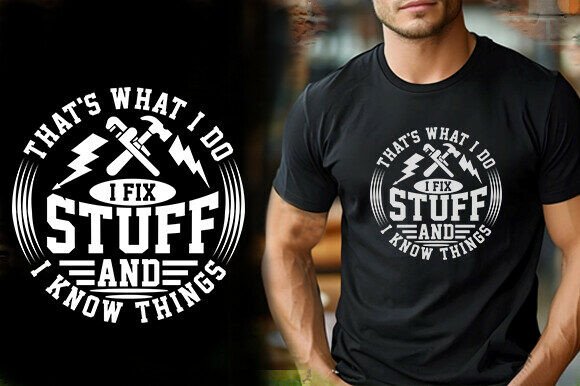
NEW THAT S WHAT I DO I FIX STUFF and I K
When you open a new file for an embroidery project, the first thing you notice is often the vibe. NEW THAT S WHAT I DO I FIX STUFF and I K immediately sets a tone of practical confidence. It isn't trying to be overly decorative or whimsical; instead, it feels like a badge of honor for someone who solves problems. As a designer who has stitched thousands of designs onto everything from delicate baby rompers to heavy-duty work aprons, I look for that specific spark of personality before I even touch the needle. This design fits right into the category of T-Shirt Designs and Graphics that are built for real-world application rather than just digital display.
I recently decided to put this design through its paces with a specific client request: custom embroidered tote bags for a local home repair workshop. The goal was to create a gift bag that felt professional yet approachable, something a handyman or a DIY enthusiast would actually want to carry their tools in. When I laid out the file on my screen, the layout of NEW THAT S WHAT I DO I FIX STUFF and I K caught my eye. It suggests a narrative of reliability. In the world of handmade products and small business merchandise, that kind of storytelling is gold. It transforms a simple embroidery file into a statement piece.
Real-World Performance on Custom Apparel
The true test of any machine embroidery design happens when the hoop tightens and the machine starts running. For NEW THAT S WHAT I DO I FIX STUFF and I K, I found it excels on standard cotton blends used for sweatshirt embroidery and t-shirt designs. The text-heavy nature of the design means that stitch density becomes a critical factor. If the density is too high, the fabric can pucker, ruining the crispness of the message. However, if balanced correctly, the design offers excellent stitching clarity.
I tested this on a dark navy polo shirt intended for a corporate gift. The contrast between the thread colors and the fabric texture made the words pop without feeling overwhelming. It works particularly well as a custom apparel accent because it doesn't require complex color changes or intricate applique techniques that might slow down production. For an Etsy seller looking to scale their shop, this is the kind of asset that keeps turnaround times reasonable while maintaining a high-quality finish. It feels like a design that customers will wear with pride, signaling their identity as problem-solvers.
Where to Use It (And Where to Be Careful)
While this design is versatile, it is not a one-size-fits-all solution. There are specific scenarios where NEW THAT S WHAT I DO I FIX STUFF and I K needs careful consideration. For instance, if you are working with small hoop sizes, such as those used for baby embroidery on onesies or tiny caps, you must scrutinize the letter spacing. Small details can get lost or merge together if the hoop size is too restrictive for the design's dimensions.
Similarly, textured fabrics present a challenge. On a rough linen or a heavily ribbed knit, the stability of the stitches can vary. You need to ensure you are using the proper stabilizer to support the weight of the threads. Stretchy fabrics like jersey require extra care; if the design is too dense, it might distort the fabric when stretched. I also advise against placing this design on curved surfaces like fitted caps unless you have specialized software adjustments, as the straight lines of the text might warp unnaturally around the brim.
Another area to watch is the washability. Since the design features a bold statement, it should be placed on items that won't be subjected to extreme abrasion immediately after washing. While durable, the longevity of the visual appeal depends on how well the thread colors were chosen against the background. Dark backgrounds generally hide minor imperfections better than light ones, but the contrast is key for readability.
Visual Appeal and Brand Consistency
In the realm of commercial embroidery, consistency is everything. NEW THAT S WHAT I DO I FIX STUFF and I K brings a sense of professionalism that elevates the perceived value of the finished product. Whether you are creating a kitchen towel for a wedding gift or a branded apron for a boutique, this design adds a layer of character that generic patterns lack. It speaks directly to the customer's desire for authenticity.
For a handmade product line, having a design that resonates emotionally helps build brand loyalty. Customers aren't just buying a shirt; they are buying into the idea of fixing things and taking action. This emotional connection translates into higher engagement and better reviews for your craft business. When designing mockups or printable mockups for your online store, this design allows you to showcase a lifestyle rather than just a product. Imagine it on a leather patch for a tool belt or stitched onto a denim jacket; the possibilities for design assets are vast.
Practical Designer Notes for Success
Before you commit to a full production run, there are several steps every experienced maker should take. First and foremost, always test the design on scrap fabric. This simple step reveals issues with tension, puckering, or thread breakage that you might miss otherwise. Check the stitch density carefully; if the fill areas look too thick, consider adjusting the settings to prevent the fabric from becoming stiff.
Review the thread colors against your intended fabric. A design that looks great on a white tee might vanish on a gray one. Test it in black and white mockups to ensure the contrast holds up without relying solely on color perception. Confirm whether the design includes instructions for both personal and commercial projects, as licensing terms can vary significantly for digital embroidery files.
If you are selling finished items, make sure you understand the limitations regarding applique design elements, though this particular piece seems to rely primarily on satin and fill stitches. Inspect small details closely, especially if you plan to use it for embroidered patches or holiday embroidery where precision is paramount. Finally, double-check the file format compatibility with your specific machine to avoid errors during the stitching process.
NEW THAT S WHAT I DO I FIX STUFF and I K is more than just a graphic; it is a tool for creators who want to add meaning to their work. Whether you are an apparel decorator fulfilling a large order or a hobbyist making a personalized gift for a friend, this design offers a solid foundation for a successful embroidery project. By paying attention to fabric choice, stabilizer usage, and testing protocols, you can ensure that the final finished product meets the highest standards of quality and style.
Ultimately, the success of any embroidery project lies in the balance between technical execution and creative vision. This design provides the vision; your skill provides the execution. With the right preparation, NEW THAT S WHAT I DO I FIX STUFF and I K can become a standout addition to your portfolio of T-Shirt Designs and Graphics, helping you connect with customers who appreciate the art of fixing things.