Slice Slice Baby Vintage Pizza Cutter Review
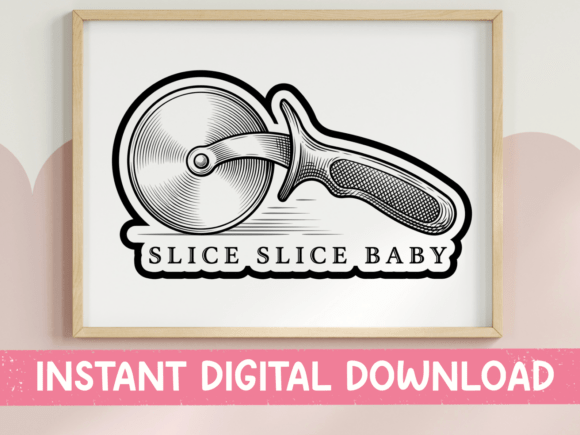
As a designer who spends more time troubleshooting stitch paths than drinking coffee, I approach every new machine embroidery design with a healthy dose of skepticism. We have all seen designs that look stunning on a digital screen but turn into a tangled mess of thread once they hit the hoop. That is why I took Slice Slice Baby Vintage Pizza Cutter for a real-world test run. This piece falls under the T-Shirt Designs and Graphics categories, which often lean heavily toward novelty, but the execution here suggests a higher level of craft. It features a detailed black and white engraved pizza wheel with a crosshatched handle sitting above the playful phrase "Slice Slice Baby." My goal was to determine if this embroidery file holds up in a commercial setting or if it is better suited for a quick hobbyist project.
The First Impression: Mood and Visual Personality
The immediate appeal of this design lies in its retro aesthetic. The vintage style gives it a timeless quality that feels less like a fleeting trend and more like a staple for a well-curated shop. When you first load the file into your software, the layout strikes a balance between illustrative detail and typographic playfulness. The crosshatched handle on the pizza cutter provides excellent texture potential, allowing for varied stitch techniques rather than relying solely on one fill pattern. This variety is crucial for keeping the eye engaged and preventing the finished product from looking flat or monotonous.
The phrase "Slice Slice Baby" adds a layer of humor without being overly aggressive. It creates a mood that is fun, casual, and inviting. This makes it an ideal candidate for custom apparel that aims to spark conversation. For designers looking to build a brand around foodie culture, family gatherings, or lighthearted parenting moments, this graphic offers a strong visual anchor. The black and white color scheme also provides flexibility, allowing you to adapt the thread colors to match specific seasonal palettes or client branding guidelines.
Real-World Application: Where Does It Shine?
To truly evaluate a design, you have to imagine it on a physical product. I envision this design performing exceptionally well on medium-weight cotton t-shirts and hoodies. The contrast of the black outlines against a heather grey or white fabric would create a crisp, professional look. However, the versatility extends beyond basic tees. Consider a tote bag design made from durable canvas. The durability of the stitching required for a pizza cutter graphic aligns perfectly with the rugged nature of a tote, ensuring the design survives frequent use.
Another strong use case is for baby items. The pun "Slice Slice Baby" is inherently playful, making it a natural fit for baby embroidery projects like onesies, burp cloths, or nursery wall art. In this context, the design serves as a personalized gift that appeals to parents with a sense of humor. Similarly, for kitchen-focused merchandise, such as aprons or tea towels, this graphic bridges the gap between utility and decoration. A holiday embroidery collection could easily incorporate this theme for Thanksgiving or Super Bowl parties, where food and gathering are central themes.
For Etsy sellers and small shop products, this design offers high perceived value. It looks custom-made yet is accessible enough for mass production. If you are creating digital product previews or printable mockups, the clean lines of the pizza cutter render beautifully, giving potential buyers a clear idea of the final result. The design’s ability to work across multiple product types—from sweatshirt embroidery to embroidered patches—makes it a versatile asset for any craft business.
Technical Challenges and Areas for Caution
While the design has many strengths, no embroidery project is without its challenges. The intricate details of the engraved pizza wheel require careful attention during digitizing and stitching. On smaller hoop size constraints, such as those used for caps or small patches, the fine lines of the crosshatching may merge together, losing their definition. It is essential to inspect these small details closely before committing to a full production run.
Fabric choice plays a significant role in the success of this design. Textured fabrics, such as heavy denim or boucle, can obscure the delicate lines of the graphic. Thin or stretchy fabrics may pucker if the stitch density is too high, especially around the dense areas of the pizza wheel. For best results, use a stable woven fabric and ensure proper stabilizer support. A cut-away stabilizer is recommended for garments that will undergo frequent washing, as it provides long-term stability and prevents distortion.
Dark fabrics present another consideration. While the design is described as black and white, using black thread on dark fabric requires careful planning to ensure visibility. You may need to use a lighter background patch or adjust the thread colors to maintain contrast. Additionally, curved surfaces like baseball caps can distort straight lines and text. Test the design on a scrap piece of the actual garment material to check how it conforms to curves and seams.
Practical Designer Notes for Success
- Test on Scrap Fabric: Always run a test stitch-out on the same type of fabric you plan to use. This helps identify potential issues with tension, puckering, or thread breaks before working on the final product.
- Check Thread Contrast: Ensure there is sufficient contrast between the thread colors and the fabric. For black and white designs, consider using off-white or light grey threads on cream fabrics to avoid a muddy appearance.
- Review Stitch Density: High-density areas can lead to needle breakage or bulky finishes. Verify that the stitch density is appropriate for the fabric weight and intended use.
- Confirm Hoop Size: Make sure the design fits comfortably within your machine’s hoop limits, leaving adequate margin for hooping stability.
- Inspect Small Details: Zoom in on the digitized file to ensure that tiny elements, like the teeth of the pizza cutter or the letters in the phrase, are distinct and not overly close together.
- Use Proper Stabilizer: Select a stabilizer that matches the fabric’s stretch and weight. For knits, a tear-away or cut-away stabilizer may be necessary to prevent shifting.
- Verify Licensing: Before selling finished items or using the design in commercial embroidery projects, confirm the licensing terms. Some digital embroidery files come with restrictions on commercial use or require additional licenses for high-volume production.
Final Verdict
Slice Slice Baby Vintage Pizza Cutter is a well-executed design that balances humor, style, and technical feasibility. It is particularly well-suited for handmade product creators who want to offer unique, conversation-starting items. The vintage aesthetic ensures it remains relevant, while the playful theme broadens its appeal across various demographics. By paying attention to fabric selection, stabilizer use, and stitch density, designers can produce a high-quality finished product that meets customer expectations and enhances their brand reputation. For creative entrepreneurs looking to expand their catalog with reliable, engaging graphics, this design is a solid addition to your design assets library.