There's No Crying in Baseball Embroidery Review
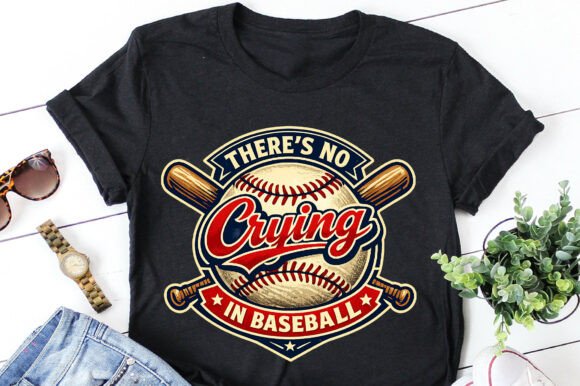
As a designer who spends more time hooping fabric than sleeping, I approach every new T-Shirt Designs asset with a mix of curiosity and skepticism. The market is flooded with digital assets, but few translate cleanly into physical reality. Today, I am evaluating the There s No Crying in Baseball Sublimation Png T-Shirt Design, a graphic that leans heavily into sports nostalgia and emotional humor. My goal here is not just to describe what it looks like on a screen, but to determine if it holds up as a viable machine embroidery design for real-world applications, from boutique merchandise to personalized gifts.
First Impressions: Mood and Visual Personality
The title alone sets a specific tone. It taps into a well-known cultural phrase, suggesting resilience, toughness, or perhaps a humorous take on childhood sports trauma. Visually, this falls under the category of Graphics that prioritize bold messaging over intricate artistry. When I first loaded the file preview, my immediate thought was about legibility. In embroidery, text is king. If the lettering isn’t crisp, the joke dies before the thread even touches the cloth.
The design feels suited for a casual, spirited aesthetic. It doesn’t scream "high fashion"; instead, it whispers "fun handmade gift." This makes it an excellent candidate for custom apparel targeting baseball moms, youth league coaches, or fans of vintage sports culture. The mood is lighthearted yet assertive, creating a product that feels personal rather than mass-produced. For an Etsy seller looking to add a touch of personality to their shop, this kind of relatable quote often drives higher engagement because buyers see themselves wearing it.
Real-World Application: Where Does It Fit?
Let’s imagine a practical scenario. You are preparing a batch of holiday gifts for your nephew’s little league team. You want something that celebrates their effort without being overly sentimental. A plain white tote bag design or a navy blue sweatshirt embroidery project comes to mind. This design would sit perfectly on the left chest of a cap or centered on the back of a hoodie.
I also see potential in nursery decor or baby items. A soft onesie featuring this phrase could be a hilarious gift for parents who know the tears that come with competitive sports. However, the context matters. On a baby embroidery project, the font size needs to be manageable so it doesn’t overwhelm the garment. Conversely, on a large apron or a kitchen towel, the design can breathe more, allowing the viewer to read the full message comfortably.
This asset works exceptionally well as a handmade product centerpiece. Unlike complex floral patterns that require high skill to execute flawlessly, text-based designs rely on clean execution. This means you can produce them quickly at craft fairs, making them ideal for craft business owners who need to turn around orders fast. The recognition factor is high; customers don’t need to decipher abstract shapes—they read it, they smile, they buy.
Technical Performance and Stitch Considerations
When converting a PNG graphic into an embroidery file, the devil is in the details. Since this is described as a sublimation PNG, we must assume it is primarily a raster image intended for heat transfer, which means the embroidery digitization (if done manually or via software) requires careful interpretation. Here is how the design elements typically perform in stitching:
- Satin Stitch vs. Fill Stitch: The lettering will likely require a dense satin stitch for sharp edges. If the font has thin serifs, those might break or pucker during high-speed stitching. A fill stitch background, if present, adds texture but increases production time.
- Stitch Density: High density is good for durability but bad for stretchy fabrics. If you plan to put this on a performance jersey or a stretchy cap, you must use a strong stabilizer to prevent puckering.
- Thread Colors: Contrast is key. On dark fabric, light threads pop, but on white fabric, you need colored threads to define the shape. Always test thread colors against your actual fabric swatch before committing to a full run.
If the design includes decorative accents or small details, inspect them closely. Tiny elements often get lost in the fabric texture or become tangled. For a finished product that needs to withstand frequent washing, simpler is often better. Complex outlines can fray or snag.
Where to Use With Caution
Not every surface is created equal. While this design is versatile, there are pitfalls:
- Small Hoop Sizes: Avoid trying to cram this into a tiny hoop unless the design is simplified. Cluttered stitching in small areas leads to needle breaks and messy finishes.
- Textured Fabrics: Denim, terry cloth, or heavy fleece can obscure fine lines. The design might look great on smooth cotton twill but disappear on a chunky knit sweater.
- Curved Surfaces: Embroidering on a caps or curved hat fronts requires precise placement. Misalignment here ruins the professional look instantly.
- Dark Fabric: Ensure your digitizer has accounted for underlay stitches. Without proper underlay, white or light threads can sink into dark fibers, making the text invisible.
Design Notes for the Practical Designer
Before you start hooping, follow these steps to ensure your embroidery project succeeds:
Test on Scrap Fabric: Never go straight to the final garment. Run the design on a scrap piece of the same material. This reveals how the fill stitch interacts with the weave and whether the tension is balanced.
Check Black and White Mockups: Convert your digital preview to grayscale. This helps you assess contrast levels. If the design loses definition in black and white, it will likely struggle in color too.
Confirm Licensing: As a digital product seller or small shop product creator, you must verify the commercial use rights. Just because you bought the PNG does not always mean you own the right to sell embroidered versions. Check the terms associated with There s No Crying in Baseball Sublimation Png T-Shirt Design carefully.
Use Proper Stabilizer: For personalized gifts like pillow covers or kitchen towels, tear-away stabilizer is usually sufficient. For custom apparel like t-shirts, cut-away stabilizer provides better long-term stability.
Final Verdict
The There s No Crying in Baseball Sublimation Png T-Shirt Design is a solid choice for designers looking to create relatable, humorous commercial embroidery pieces. It excels in scenarios where emotional connection drives sales—gifts, team spirit wear, and nostalgic apparel. While it may not be suitable for ultra-fine detail work or delicate fabrics, its strength lies in its clear message and broad appeal.
For the creative entrepreneur or maker, this asset offers a low-risk, high-reward opportunity. It requires standard digitization care, relies on good contrast, and fits seamlessly into a catalog of design assets aimed at sports fans. If you treat it with the respect due to any embroidery project—testing, planning, and executing with precision—you will end up with a finished product that customers love and trust.
Remember to share your results and comments if you find this helpful. The community of apparel decorators grows stronger when we share practical insights. Happy stitching!