Desert Dunes Panoramic Landscape Review
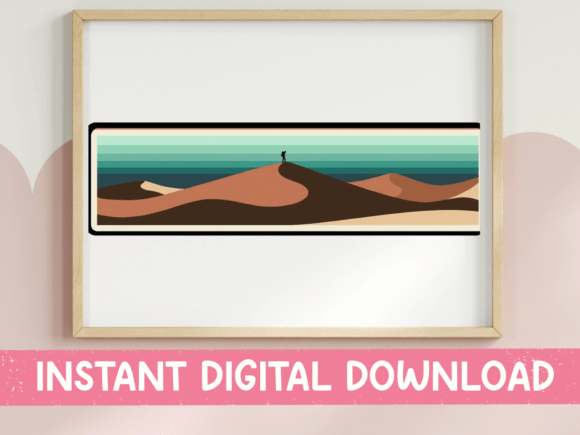
When I sit down to evaluate a new digital asset for my studio, I am rarely looking at it as just a graphic. I am looking at it as a potential stitch pattern. As an experienced designer who reviews embroidery files for real-world application, I look for clarity, balance, and the ability to translate well from screen to fabric. Recently, I’ve been examining Desert Dunes Panoramic Landscape, a design marketed under the categories of T-Shirt Designs and Graphics. While the source description frames it as a "panoramic sticker" featuring a lone figure on rolling sand dunes in a minimalist horizontal layout, my job is to determine if that concept survives the transition into a physical machine embroidery design.
The mood of this piece is immediately striking. It evokes the quiet drama of wide-open spaces, appealing directly to the desert explorer or road tripper demographic. For a small business owner or Etsy seller looking to tap into the bohemian or adventure-culture aesthetic, this visual personality offers a strong foundation. However, the challenge lies in execution. A panoramic silhouette requires careful consideration of stitch density and negative space to avoid becoming a muddy blob on fabric.
First Impressions and Visual Personality
The core strength of Desert Dunes Panoramic Landscape is its simplicity. The minimalist horizontal structure suggests a design that relies on shape rather than intricate detail. In the world of embroidery project planning, less is often more. A lone figure standing atop a dune creates a focal point that is both serene and commanding. This is not a busy, chaotic design; it is calm, deliberate, and sophisticated.
From a branding perspective, this design fits seamlessly into boutique branding for apparel decorators who specialize in nature-inspired or travel-themed merchandise. The "mood" described in the product text translates well to handmade products that aim to evoke emotion. When a customer sees a sweatshirt embroidered with such a clean, expansive landscape, they are buying into a feeling of freedom and solitude. This emotional connection is what drives sales in the craft business sector, particularly among hobbyists and creative entrepreneurs who value storytelling through their goods.
Real-World Application: Where This Design Shines
I have spent considerable time thinking through how Desert Dunes Panoramic Landscape would perform across various product types. Because of its panoramic width, it demands a canvas that can accommodate its proportions without distortion. Here is where I see the highest potential for success:
- Sweatshirt Embroidery: The chest area of a crewneck sweatshirt provides a perfect horizontal rectangle for this design. The soft texture of fleece or cotton blends complements the organic shapes of the dunes. This is ideal for creating a premium personalized gift for someone who loves the outdoors.
- Tote Bag Design: A standard canvas tote offers ample space for a panoramic layout. If executed with clean satin stitch edges and efficient fill stitch techniques, this could become a standout item in any Etsy seller’s shop. It appeals to the same demographic that buys travel gear and eco-friendly accessories.
- Embroidered Patch: While the design is panoramic, scaling it down to fit a standard patch size (such as 4x4 inches) might compress the horizon line too much. However, if used as a larger back-patch for a denim jacket or a backpack, it would look stunning. It adds a touch of wanderlust to utilitarian garments.
- Kitchen Towels and Aprons: For makers focusing on home goods, the long, narrow format of a tea towel is a natural fit. The minimalist aesthetic pairs well with modern farmhouse or rustic kitchen decor. It transforms a simple utility item into a piece of art.
- Baby Embroidery: Surprisingly, this design could work well on a large muslin blanket or a nursery wall hanging. The soft, rolling lines of the dunes are gentle and non-threatening, making it suitable for a child’s room. It serves as a unique alternative to traditional baby animals or clouds.
Technical Challenges and Areas of Caution
Not every design is created equal, and Desert Dunes Panoramic Landscape has specific constraints that designers must respect. Ignoring these can lead to frustrated customers and ruined inventory.
Hoop Size and Fabric Texture: The panoramic nature means you cannot simply shrink this design to fit a tiny 2x2 inch hoop without losing the essence of the composition. You need a hoop size that respects the aspect ratio. Furthermore, textured fabrics like heavy tweed or thick chenille can obscure the fine details of the dune ridges. Stick to smooth, tight-weave fabrics like cotton twill, jersey, or canvas for the best clarity.
Thread Color Contrast: Since the design is minimalist, color choice is critical. On dark fabric, you will need bright or metallic threads to make the dunes pop, which can sometimes feel harsh against the "quiet drama" of the theme. On light fabric, ensure your thread colors offer enough contrast to define the silhouette. I always recommend testing thread colors on scrap fabric first to check for contrast issues before committing to a full production run.
Stitch Density and Stability: Panoramic designs often use large areas of fill stitch. If the stitch density is too high, the fabric will pucker, ruining the clean lines of the dunes. Conversely, if the density is too low, the underlying fabric may show through, making the design look cheap. Using a proper stabilizer is non-negotiable here. For stretchy fabrics like t-shirts, a cut-away stabilizer is essential to prevent the embroidery from warping over time.
Curved Surfaces: Attempting to embroider this panoramic design on a curved surface like a baseball cap is risky. The curvature will distort the horizon line, turning the majestic dunes into a wavy mess. If you must use caps, consider placing the design on the flat front panel only, or opt for a smaller, circular motif instead.
Professional Notes for Designers and Sellers
Before adding Desert Dunes Panoramic Landscape to your library of design assets, there are several practical steps you should take. First, inspect the file for small details. The description mentions a "lone figure," but in embroidery, human figures can be notoriously difficult to render clearly unless they are stylized. Ensure the figure is distinct and not lost in the background.
Second, test the design in black and white mockups. This helps you see the true value and contrast of the shapes without being distracted by color. If the design looks good in grayscale, it will likely look great in color. Third, confirm licensing. As a reviewer, I cannot stress this enough: verify whether you have commercial rights to sell finished products made from this digital embroidery file. Many graphics sold under categories like T-Shirt Designs are intended for personal use only.
Finally, think about your customer. Who is buying this? Is it the road tripper who wants to commemorate a journey? Or the desert explorer who appreciates the beauty of arid landscapes? Tailor your marketing copy to speak to their identity. Use terms like "wanderlust," "minimalist," and "handcrafted" to enhance the perceived value of the finished product.
Final Verdict
Desert Dunes Panoramic Landscape is a strong candidate for designers who appreciate clean, atmospheric aesthetics. It succeeds in creating a mood that resonates with a specific, passionate audience. However, its success depends entirely on technical execution. By respecting the panoramic layout, choosing the right fabric and stabilizer, and ensuring clear stitch definition, you can turn this graphic into a high-quality custom apparel item or a beloved personalized gift.
For the Etsy seller or small shop product creator, this design offers a way to stand out in a crowded market by offering something different from the usual floral or cartoon motifs. It is sophisticated, calm, and visually striking. Just remember to test thoroughly, check your thread contrasts, and always prioritize the integrity of the stitch work. When done right, this design doesn't just decorate a garment; it tells a story of open roads and silent horizons.