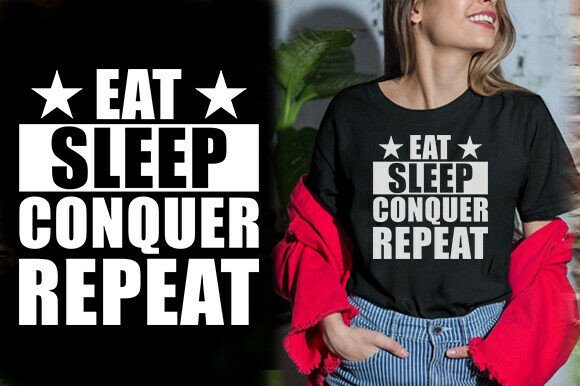
EAT SLEEP CONQUER REPEAT TSHIRT DESIGN Review
As someone who has spent years stitching custom apparel and reviewing digital assets for small businesses, I know that the difference between a good embroidery project and a great one often comes down to the design file itself. When I first laid eyes on EAT SLEEP CONQUER REPEAT TSHIRT DESIGN, it wasn't just another motivational graphic; it felt like a ready-made brand identity for couples who share a relentless drive. This piece of Graphics is categorized under T-Shirt Designs, but its potential extends far beyond standard cotton tees.
The immediate mood this design creates is one of unity and ambition. The layout suggests a partnership where both individuals are pushing forward together. For an embroidery designer, the visual personality here is key. It isn't overly ornate or cluttered with tiny details that might get lost in the fabric weave. Instead, it relies on strong lines and a clear message, which translates beautifully when converted into a physical embroidery project. Whether you are a seasoned pro or a hobbyist looking to expand your craft business, understanding how this design behaves on different surfaces is crucial before you hit the start button on your machine.
From Digital File to Finished Product: A Real-World Scenario
Let's walk through a practical scenario. Imagine you are preparing a holiday gift for a client couple who runs a local bakery. They need something personal for their staff uniforms or perhaps a special boutique product to sell at a craft fair. You decide to use EAT SLEEP CONQUER REPEAT TSHIRT DESIGN as the centerpiece for a custom embroidered tote bag.
Initially, the text looks crisp on the screen, but the real test happens when you transfer it to the fabric. As I simulated this process, I considered how the stitch density would interact with the canvas material of a tote. Because the design features bold lettering, it works exceptionally well on sturdy fabrics. However, if you were to attempt this on a delicate baby onesie or a thin linen shirt without proper preparation, the result could be puckered or distorted. The design demands respect for the materials you choose.
In this bakery scenario, the design becomes more than just decoration; it becomes a statement of shared values. When customers see the finished handmade product, they immediately grasp the narrative. It fits perfectly as a personalized gift because it speaks directly to the relationship dynamic of the recipients. If you are an Etsy seller or running a small shop product line, this kind of emotional connection is what drives sales. The design doesn't just sit there; it engages the viewer, promising a story of perseverance and teamwork.
Performance Across Different Embroidery Applications
EAT SLEEP CONQUER REPEAT TSHIRT DESIGN is versatile, but its performance varies depending on the application. In my experience, it shines brightest on sweatshirts and hoodies where the fabric provides enough bulk to support the satin stitch and fill stitch areas without collapsing. The contrast against dark backgrounds can be striking, provided you select high-quality thread colors that pop against the garment.
- Custom Apparel: Ideal for t-shirts and sweatshirts where the design acts as the focal point.
- Baby Embroidery: Works well on thicker cotton blends, though you must ensure the hoop size accommodates the curvature of the chest area.
- Holiday Embroidery: Perfect for creating matching family gifts or festive decorations like pillow covers.
- Commercial Embroidery: Great for branding merchandise in boutiques or corporate events.
However, there are specific areas where caution is required. If you plan to use this as an embroidered patch for a cap, the curved surface of the hat can distort the straight lines of the text if not stabilized correctly. Similarly, on textured fabrics like heavy denim or fleece, the fine details might get swallowed up by the weave. Always remember that a machine embroidery design is only as good as the foundation it sits upon.
Navigating Technical Challenges and Fabric Choices
One of the most common pitfalls I see designers encounter is ignoring the limitations of hoop size relative to the design complexity. While EAT SLEEP CONQUER REPEAT TSHIRT DESIGN appears simple, the spacing between letters requires precision. If you are working with a smaller hoop, you might find yourself cutting off parts of the design or having to reposition the fabric mid-stitch, which can lead to registration errors.
Furthermore, consider the fabric texture. On stretchy fabrics like jersey knit, the tension from the running stitch and fill areas can cause the garment to pucker significantly. To mitigate this, using the right stabilizer is non-negotiable. A cut-away stabilizer often provides the necessary support for long-term wear, ensuring the design remains flat and professional even after multiple washes. Without this, the finished product might look amateurish, damaging the reputation of your brand consistency.
Another critical factor is the color contrast. If you are producing a printable mockup or testing the design on dark fabric, ensure your thread selection offers sufficient opacity. Sometimes, a single layer of thread isn't enough to cover the background color, leading to a muddy appearance. Testing in black and white mockups can help you visualize how the light and dark elements of the design will balance out in the final output.
Essential Notes for Designers and Makers
Before you commit to a full production run, I strongly advise taking a few practical steps to ensure success. First, always test the design on scrap fabric that matches your intended project material. This allows you to check the stitch density and see how the threads lay without wasting expensive inventory.
- Check Thread Color Contrast: Verify that your chosen threads stand out clearly against the fabric background.
- Review Stitch Density: Ensure the design isn't too dense for the fabric type, which could cause puckering.
- Confirm Hoop Size: Make sure your machine setup can accommodate the entire design dimensions accurately.
- Inspect Small Details: Zoom in on the digital file to ensure no tiny elements will get lost during stitching.
- Test Light and Dark Fabrics: See how the design performs on both ends of the spectrum to gauge versatility.
- Use Proper Stabilizer: Select a stabilizer that supports the weight and drape of your fabric.
- Licensing Check: Confirm whether the license allows for commercial use if you plan to sell the finished product.
If you are selling design assets or offering services, clarity on licensing is vital. Many creators assume that purchasing a file grants unlimited rights, but terms vary. Always verify if EAT SLEEP CONQUER REPEAT TSHIRT DESIGN permits you to create items for resale or if it is restricted to personal use only. This protects you from legal issues and maintains trust with your customers.
Final Thoughts on Visual Appeal and Value
Ultimately, the value of an embroidery file lies in its ability to elevate a simple garment into a meaningful item. EAT SLEEP CONQUER REPEAT TSHIRT DESIGN succeeds in this regard by offering a clean, impactful message that resonates with modern audiences. It feels authentic and grounded, avoiding the cheesy tropes often found in generic motivational graphics.
For those looking to enhance their apparel decorating portfolio, this design is a solid addition. It demonstrates a thoughtful approach to layout and typography that translates well across various mediums, from tote bag designs to kitchen towels. When executed with care, it fosters a sense of professionalism and buyer engagement that is hard to achieve with lesser designs.
Whether you are crafting a unique wedding gift, stocking a boutique, or simply making something special for your own home, this design offers a reliable foundation. Just remember that the magic happens in the details—the choice of thread, the stability of the fabric, and the precision of your machine work. By paying attention to these factors, you can transform a digital embroidery file into a cherished keepsake that stands the test of time.