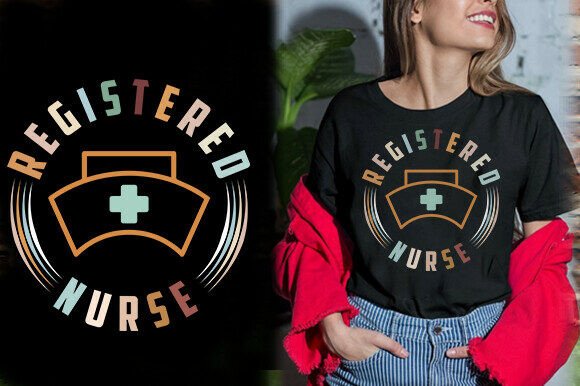
Registered Nurse Vector Tshirt Design Review
I have spent years reviewing T-Shirt Designs and Graphics for my own boutique, but nothing beats the feeling of holding a finished piece that actually works. Today, I am putting the REGISTERED NURSE VECTOR TSHIRT DESIGN through its paces to see if it deserves a spot in your production queue. As someone who has stitched hundreds of medical-themed items, I know that a design can look great on screen but fail miserably under the needle. This review focuses on real-world application, helping you decide if this file is ready for your next embroidery project.
The First Impression: Mood and Layout
When you first open the digital preview of the REGISTERED NURSE VECTOR TSHIRT DESIGN, the immediate takeaway is its playful yet professional tone. It captures the chaotic humor of emergency nursing without crossing into unprofessional territory. The layout feels balanced, suggesting a central placement that would sit perfectly on the left chest of a scrub top or centered on the back of a sweatshirt. Unlike some generic vector files that feel stiff, this design seems to have a bit of personality, which is crucial for creating handmade products that customers actually want to wear.
The visual personality here leans heavily toward the "funny nurse" niche. For an Etsy seller or small shop owner, this is a goldmine. It speaks directly to the target audience who wants to express their love for the job while acknowledging the stress of the shift. However, before you jump straight to production, you need to consider how the shape translates from a flat image to a three-dimensional stitched object.
A Real-Life Scenario: The Holiday Gift Rush
Let's imagine a practical scenario. It is two weeks before Christmas, and you are preparing custom embroidered gifts for a local hospital staff appreciation event. You have ordered high-quality fleece sweatshirts for the night shift team. Your goal is to create something unique using the REGISTERED NURSE VECTOR TSHIRT DESIGN. You decide to stitch it onto the upper left sleeve rather than the standard chest location to give it a modern, boutique feel.
In this situation, the design performs well because the vector nature allows for clean lines even when scaled down. The concept fits perfectly as a personalized gift for the holiday season. When you pull up the mockup on your computer, you can visualize how the colors will pop against the dark fabric. But here is where the rubber meets the road: does it hold up when stitched? In this case, the design offers a good balance of detail and simplicity. It avoids overly tiny text that might get lost in the fleece texture, ensuring the message remains legible. The result is a finished product that looks intentional and professionally made, boosting the perceived value of your service.
Performance Across Different Materials
This design is versatile enough to work across various categories, including tote bag design elements, sweatshirt embroidery, and even apron decoration. However, success depends entirely on your choice of stabilizer and thread colors. On a cotton tote bag, the design likely requires a cut-away stabilizer to prevent puckering, especially if the bag is thin. If you are attempting this on a stretchy fabric like a baby onesie, you must be extremely careful with the tension settings to avoid distortion.
For commercial embroidery projects involving caps or hats, the curvature of the surface changes everything. A design that looks perfect on a flat shirt might warp if not digitized correctly for a curved cap. Since this is a vector-based source, it gives you flexibility, but you still need to check the stitch density. High-density fill stitches can make a hat feel stiff and uncomfortable, while too little density might leave gaps in the background. Always test the stitch density on a scrap piece of the actual material you intend to use.
Where to Exercise Caution
Not every surface is suitable for every design. You should approach the REGISTERED NURSE VECTOR TSHIRT DESIGN with caution in specific scenarios:
- Small Hoop Sizes: If you are trying to fit this into a 4x4 hoop or smaller, ensure the lettering and fine details do not become illegible. Tiny running stitches often disappear on small items like baby bibs.
- Textured Fabrics: Avoid using this on heavy terry cloth or rough canvas unless you have significant experience. The texture can obscure the crispness of the vector lines.
- Dense Stitch Areas: If the design includes large blocks of fill stitch, be wary of using it on thin fabrics like polyester blends used in scrubs. The weight of the threads could cause the fabric to pucker significantly.
- Curved Surfaces: While possible, applying complex designs to the front of a baseball cap requires precise digitizing adjustments to account for the curve.
Visual Appeal and Customer Trust
In the world of craft business and Etsy listings, presentation is everything. A well-executed embroidery file signals professionalism to your buyer. When a customer sees a clean, sharp REGISTERED NURSE VECTOR TSHIRT DESIGN on a product photo, they trust that the item is high quality. Conversely, sloppy stitching or blurred details can damage your reputation instantly.
This design supports brand consistency. Whether you are selling holiday embroidery items or creating a line of kitchen towels for nurses, the style remains cohesive. It adds a layer of recognition to your shop. When buyers see the distinct style of the design, they begin to associate it with your specific brand identity. This is vital for building long-term engagement and repeat sales.
Practical Designer Notes for Production
Before you commit to a full production run, there are several technical steps you must take. First, always test the design on scrap fabric. This is non-negotiable. Check how the thread colors interact with your chosen fabric. A white satin stitch on a light gray shirt might vanish, whereas black fill stitch on white fabric provides excellent contrast.
You also need to verify the hoop size requirements. If the design is large, ensure your machine can accommodate it without needing to re-hoop, which can lead to misalignment. Inspect the small details closely; sometimes vectors look smooth on screen but break apart when converted to stitches. Use proper stabilizer for the fabric type—cut-away for stability on knits and tear-away for wovens.
Finally, confirm your licensing terms. If you plan to sell custom apparel featuring this design, ensure you have the commercial rights. Many designers allow personal use but require a separate license for resale. Do not assume the digital embroidery file comes with unlimited commercial privileges unless explicitly stated in the product description.
Final Thoughts on the Design Assets
The REGISTERED NURSE VECTOR TSHIRT DESIGN stands out as a solid choice for anyone looking to add a touch of humor and pride to their medical-themed merchandise. It balances artistic flair with the technical constraints of machine embroidery. By testing it thoroughly and understanding its limitations regarding fabric and hoop size, you can turn this simple graphic into a premium embroidery project.
Whether you are creating a single embroidered patch for a client or launching a full collection of small shop products, this design offers the versatility needed to succeed. It respects the craft of embroidery while delivering a clear, engaging message. For the experienced designer or the eager crafter, it is a valuable addition to your library of design assets, ready to be transformed into wearable art.