Lucky You Four Leaf Clover Print Review
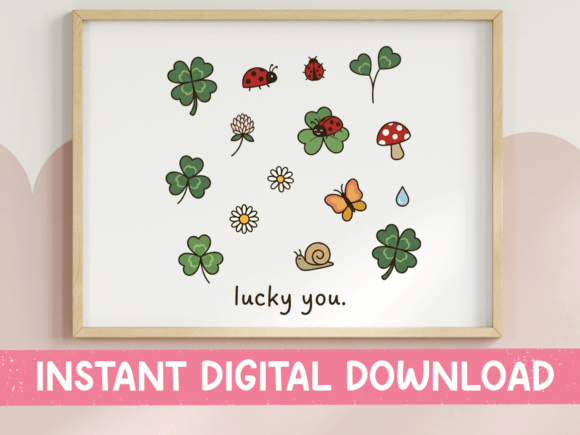
I have spent years reviewing digital assets for the embroidery community, and I know that a pretty image on a screen does not always translate to a beautiful stitched product. When Lucky You Four Leaf Clover Print landed in my inbox, I didn't just look at the pixels; I immediately started visualizing the thread tension, the fabric grain, and how it would feel in a customer's hands. This is a sticker-style print that clusters four-leaf clovers, ladybugs, mushrooms, a snail, a butterfly, a daisy, and a small water drop around centered lucky you script. The whole thing reads like a tiny gooey charm, but can it hold up as a serious embroidery design?
The first impression of Lucky You Four Leaf Clover Print is undeniably whimsical. It screams "springtime" and "good fortune." The layout feels organic rather than rigid, which is exactly what you want when moving from a flat graphic to a tactile machine embroidery design. Unlike many generic clip-art collections that feel stiff, this piece has a personality. It suggests a story about nature and luck, making it perfect for a handmade product line that focuses on positivity or baby gifts.
Real-World Application: The Tote Bag Test
To truly evaluate any T-Shirt Designs or apparel graphics, I need to see them in action. Let's imagine a real-life scenario: I am preparing a custom embroidered tote bag for a local craft fair. The goal is to create a unique accessory that stands out on a crowded table without looking mass-produced.
I pulled out some heavy-duty canvas and set up my hoop. Placing Lucky You Four Leaf Clover Print in the center felt natural. The cluster of elements—the snail, the mushroom, and the daisy—creates a nice focal point that draws the eye. However, the challenge with this specific embroidery file lies in the density. Because the design is so packed with characters, I had to be careful not to overcrowd the stitching. If I used too much fill stitch, the fabric would pucker, ruining the delicate vibe of the snail and butterfly.
For this project, I opted for a lighter thread count and focused on satin stitch for the outlines of the clovers and the script text. The result was soft and textured, exactly what buyers expect from a boutique item. The "sticker-style" aesthetic translates well into thread because the edges are distinct enough to be defined by a running stitch or a tight satin border. This makes Lucky You Four Leaf Clover Print an excellent choice for a tote bag design where you want the art to pop against a solid background color.
Where This Design Shines
When thinking about where Lucky You Four Leaf Clover Print fits best in your catalog, the possibilities are vast. It is versatile enough for custom apparel like sweatshirts, but it really excels on items that benefit from a playful, nostalgic feel. Here are a few scenarios where this design delivers:
- Baby Embroidery: The gentle colors and cute creatures make it ideal for a onesie or a nursery pillow cover. Parents love personalized gifts that feel special and lucky.
- Holiday Embroidery: St. Patrick's Day is obvious, but the spring theme works beautifully for Easter or Mother's Day gifts.
- Home Decor: A tea towel or kitchen towel featuring this design adds a touch of charm to a home cook's space.
- Embroidered Patch: If you cut the design out and add a backing, it could serve as a high-quality patch for denim jackets or backpacks.
- Etsy Seller Inventory: For digital product sellers, this serves as a great mockup asset. Customers love seeing a preview of how a printable mockup will look before they buy.
Potential Pitfalls and Technical Considerations
As an experienced reviewer, I must be honest about where things can go wrong. While Lucky You Four Leaf Clover Print is charming, it requires technical precision. The design includes tiny details like the legs of the ladybug and the texture of the snail shell. These elements are prone to getting lost if the stitch density is too low or if the fabric is too stretchy.
If you attempt to use this on a dark fabric without proper underlay, the colors might muddy together. The script text, being central, needs to be legible. If the font size is too small relative to the surrounding icons, it will become a blob of thread. I strongly advise testing the design on scrap fabric first. Check the thread color contrast carefully; a light yellow daisy on a white background might disappear unless you use a contrasting outline stitch.
Another critical factor is the hoop size. Because the design is a cluster, it likely requires a medium-sized hoop to accommodate all the elements without cutting off the outer clovers. If you try to force this into a small 4x4 hoop, you risk losing the "water drop" or the edge of the mushroom. Always confirm the recommended dimensions before starting production.
Practical Designer Notes for Success
To ensure your finished product looks professional and maintains high value, follow these guidelines when working with this digital embroidery file:
- Test Stitch Density: Review the density settings. Too dense, and the fabric puckers; too loose, and the fabric shows through. Adjust based on your machine's capabilities.
- Select Proper Stabilizer: Use a tear-away or cut-away stabilizer depending on the fabric weight. For stretchy fabrics like t-shirts, a cut-away is essential to prevent distortion over time.
- Inspect Small Details: Zoom in on the digital preview. Ensure the snail and butterfly wings are large enough to be stitched clearly. If they are too fine, consider simplifying the design in your editing software.
- Check Licensing: Before selling finished items or offering this as a design asset, confirm the license terms. Some files allow commercial use only for physical goods, while others restrict resale entirely.
- Mockup Comparison: Create both light and dark fabric backgrounds in your mockups. See how the thread colors interact with different shades to ensure the design remains visible.
Final Verdict on Visual Appeal and Brand Value
In the world of craft business and small shop products, trust is built on quality. A sloppy stitch job can ruin a brand, but a well-executed design builds loyalty. Lucky You Four Leaf Clover Print has the potential to elevate a simple project into a premium item. The cohesive theme of luck and nature creates a strong emotional connection with the buyer.
It works particularly well for commercial embroidery projects where branding consistency matters. Imagine a boutique selling handmade aprons with this motif—it tells a story of domestic joy and good luck. The design feels authentic rather than generic, which helps justify a higher price point for the finished product.
However, remember that the success of the final piece depends heavily on execution. The difference between a cheap-looking souvenir and a cherished keepsake often comes down to the choice of thread, the stability of the fabric, and the care taken during the hooping process. If you treat Lucky You Four Leaf Clover Print with respect and attention to detail, it will reward you with a stunning, market-ready design.
Whether you are a hobbyist looking to make a gift for a friend or an Etsy seller expanding your inventory, this design offers a solid foundation. Just keep the technical limitations in mind, test thoroughly, and let the charm of the clover and its forest friends shine through the thread. With the right approach, Lucky You Four Leaf Clover Print becomes more than just a graphic; it becomes a centerpiece of your creative work.