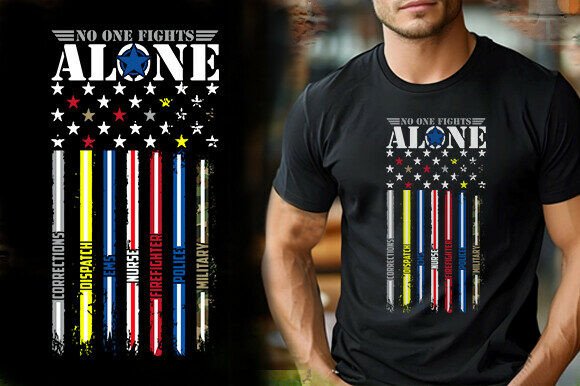
No One Fights Alone Military Nurse Policing
When I pull a new design file into my hoop, I am not just looking at pixels or vector lines; I am visualizing the final stitched product. As an experienced designer and reviewer of embroidery assets, my job is to determine if a design like NO ONE FIGHTS ALONE MILITARY NURSE POLIC actually holds up under the tension of a sewing machine needle and the scrutiny of a customer who wants quality. This piece falls under the broad umbrella of T-Shirt Designs and Graphics, but in the world of machine embroidery, those labels mean very little until you see how the stitches interact with fabric.
The title itself carries weight. It speaks to support, solidarity, and the specific niche of military nursing and law enforcement support. For crafters, Etsy sellers, and small shop owners, this isn't just text; it is an emotional hook. But does the visual execution match that emotional promise? Let’s break down how this design performs in real-world scenarios, from custom apparel to delicate baby items.
First Impressions and Visual Mood
The immediate impression of NO ONE FIGHTS ALONE MILITARY NURSE POLIC is one of boldness and clarity. The layout appears designed for high readability, which is crucial when dealing with long phrases on smaller garments. In embroidery, text can easily become muddy if the font choice is too ornate or if the spacing is off. Here, the visual personality suggests a straightforward, no-nonsense approach that aligns perfectly with military and police culture.
The theme resonates deeply with veteran communities and their families. When I look at the shape and detail level, I see a design that prioritizes legibility over intricate artistic flourish. This makes it an excellent candidate for commercial embroidery projects where the message needs to be understood instantly. The mood created is supportive and proud, making it suitable for a wide range of handmade products, from heavy-duty workwear to sentimental gifts.
Real-Life Application: From Hoop to Hand
I recently considered using this design for a custom embroidered tote bag intended as a gift for a retired nurse who also supported her spouse in law enforcement. The challenge with tote bags is often the fabric texture and the size of the embroidery area. Because NO ONE FIGHTS ALONE MILITARY NURSE POLIC relies on clear lettering, it translates exceptionally well to canvas or cotton blends. The design anchors the bag without overwhelming it.
However, the versatility of this design extends far beyond totes. It is equally effective for sweatshirt embroidery, where the thicker fabric can handle the stitch density required for such a substantial phrase. Imagine a cozy fleece pullover with this design centered on the chest; it becomes a statement piece that signals belonging and pride. For baby embroidery, such as onesies or burp cloths, the sentiment adds a layer of meaning that parents appreciate, turning a simple utility item into a cherished keepsake.
In the realm of personalized gifts, this design shines. Whether it is an embroidered patch for a backpack, a kitchen towel for a home cook who serves, or a pillow cover for a living room, the phrase works because it is inclusive yet specific. It appeals to the "military nurse" demographic while also resonating with police families. For digital product sellers creating printable mockups, this design offers a strong focal point that draws the eye immediately, increasing click-through rates on platforms like Etsy.
Where Caution Is Required
Not every surface is created equal, and NO ONE FIGHTS ALONE MILITARY NURSE POLIC has limitations. You must be careful when applying this to small hoop sizes. If the design is scaled down too much, the individual letters may merge, losing the crispness that makes the message powerful. Similarly, textured fabrics like bouclé or heavily ribbed knits can obscure the details of the satin stitch used for outlines or fills.
Thin or stretchy fabrics present another challenge. Without proper stabilization, the tension of the thread can pucker the material, distorting the text. Curved surfaces, such as baseball caps or beanies, require a curved hoop and careful placement. If the design is too rigid or wide, it may not follow the curve of the hat naturally, leading to a finished product that looks warped rather than tailored. Additionally, dense stitch areas should be avoided on decorative accents that need to remain soft and flexible.
Technical Performance and Stitch Clarity
From a technical standpoint, the success of this embroidery project hinges on stitch density and thread color contrast. The design likely utilizes a mix of fill stitch for background elements and satin stitch for borders or key letters. High stitch density provides durability, which is essential for items that will undergo frequent washing, such as aprons or work shirts. However, excessive density can make the fabric stiff, reducing comfort.
Thread colors play a pivotal role here. On dark fabric, light threads are necessary for visibility, but they may require a higher number of passes to achieve opacity, potentially increasing the time it takes to embroider. Conversely, on light backgrounds, darker threads provide sharp contrast. I always recommend testing the design in black and white mockups first. This helps you visualize how the different shades of thread will interact and ensures that the hierarchy of the text remains clear regardless of the color palette chosen.
The visual appeal of the finished product is directly tied to these technical choices. A well-executed NO ONE FIGHTS ALONE MILITARY NURSE POLIC design builds customer trust. Buyers associate clean stitches and accurate alignment with professionalism. When a customer receives a hoodie with this design, they are buying more than a garment; they are buying a symbol of support. If the embroidery is sloppy, that symbolism is lost. Therefore, maintaining brand consistency through precise stitching is vital for small business owners looking to establish a reputation for quality.
Practical Designer Notes for Success
To ensure the best results, follow these practical steps before committing to a full production run:
- Test on Scrap Fabric: Always run the design on the same type of fabric you plan to use for the final product. This reveals how the material reacts to the needle and stabilizer.
- Check Thread Contrast: Evaluate your thread choices against the fabric. Ensure there is enough contrast for the text to be readable from a distance.
- Review Stitch Density: Look closely at the digital preview. Are there areas where the stitches are too close together, risking bulkiness? Adjust if necessary.
- Confirm Hoop Size: Verify that your machine’s hoop can accommodate the design dimensions without cutting off parts of the text.
- Inspect Small Details: Zoom in on the smallest letters or graphic elements. Can they still be distinguished after stitching?
- Use Proper Stabilizer: Choose a cut-away or tear-away stabilizer appropriate for the fabric weight to prevent puckering.
- Check Licensing: Before selling finished items or offering this as a digital embroidery file, confirm the licensing terms. Commercial use rights vary, and respecting intellectual property is crucial for legal safety.
Ultimately, NO ONE FIGHTS ALONE MILITARY NURSE POLIC is a design that succeeds when treated with respect for its message and its technical requirements. It is not merely a graphic to be stamped onto a shirt; it is a narrative woven into fabric. For the skilled embroiderer, it offers an opportunity to create something meaningful. By paying attention to the nuances of stitch density, fabric choice, and presentation, you can transform this design asset into a finished product that honors the spirit of service and support it represents. Whether you are a hobbyist making a gift or an Etsy seller building a boutique line, this design provides a solid foundation for creating memorable, high-value merchandise.