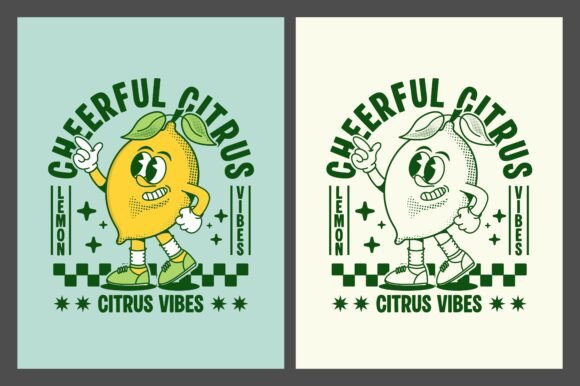
Poster Retro Lemon Character Design
As a designer who spends half my day staring at digitized files and the other half troubleshooting stitch errors on an embroidery machine, I have learned to be skeptical of every new asset I download. We are all tired of designs that look beautiful in a digital preview but turn into a muddy, tangled mess once the needle starts moving. That is why I took Poster Retro Lemon Character Design for a real-world test run. This isn't just about how it looks on a screen; it is about whether it holds up when translated into thread, fabric, and physical product.
The premise is simple: a retro lemon character vector set intended for streetwear branding, groovy posters, and stickers. It comes in both color and line-art styles. On paper, or rather on a monitor, this sounds like a perfect fit for the current "cottagecore" meets "streetwear" aesthetic that dominates platforms like Etsy and Instagram. But does it survive the hoop?
First Impressions and Visual Personality
When you first open the file, the mood is immediately distinct. The character has a playful, slightly quirky personality that feels nostalgic without being cheesy. For an embroidery project, visual clarity is king. If a design relies too heavily on subtle gradients or tiny internal details, it will fail in stitching. The strength of this particular design lies in its bold outlines and solid shapes. Whether you choose the full-color version or the minimalist line-art style, the core structure is robust enough to translate well into satin stitches and fill stitches.
The theme screams casual confidence. It is not formal, which makes it incredibly versatile. It fits naturally into projects aimed at teenagers, young adults, or anyone looking for a touch of whimsy in their wardrobe. As a reviewer, I appreciate that the design doesn't try to do too much. It is a single focal point, which means it won’t compete with other elements on a garment, making it ideal for chest logos on sweatshirts or centered prints on tote bags.
Real-World Application: From Screen to Stitch
Let’s talk about where this design actually shines. I envision this embroidery project performing exceptionally well on specific items. First, consider the classic canvas tote bag. A retro lemon character embroidered on a natural cotton canvas creates an instant boutique vibe. The contrast between the sturdy fabric and the smooth threads of the lemon character enhances the handmade appeal. It is the kind of item that sits on a shelf at a craft fair and sells itself because it looks approachable and fun.
Another strong candidate is custom apparel, specifically oversized t-shirts or hoodies. In the realm of T-Shirt Designs, simplicity often wins. A small, well-placed lemon character on the left chest of a black hoodie offers a subtle nod to personality without overwhelming the wearer. It works as a statement piece when placed larger on the back, especially if you utilize the line-art style for a cleaner, more modern look.
I also see potential in home goods. Imagine this design on a linen tea towel or a kitchen apron. The bright yellow of the lemon pops against neutral fabrics, adding a splash of color to a mundane object. It transforms a simple kitchen tool into a personalized gift that feels thoughtful and curated. For baby clothes, the soft curves and friendly face make it safe and appealing, provided you use high-quality, soft threads.
Where Caution Is Required
However, no design is flawless, and as an experienced reviewer, I must highlight where this embroidery file might struggle. The primary concern lies in the level of detail relative to the size of the hoop. If you attempt to digitize or embroider this design in a very small hoop size (under 3x3 inches), you risk losing definition. Tiny corners of the character’s expression or thin lines in the vector art may become indistinct blobs of thread.
Furthermore, fabric choice matters immensely. Avoid using this design on highly textured fabrics like heavy bouclé or thick chenille unless you are an expert stabilizer user. The texture can interfere with the stitch placement, causing puckering or misalignment. Similarly, stretchy knits require careful hooping and potentially a cut-away stabilizer to prevent distortion. If you are working on dark fabric, ensure your thread colors provide sufficient contrast; a pale yellow lemon on a navy shirt might get lost unless you use a bright, saturated thread.
Also, consider the end-use of the product. If you are creating an embroidered patch for a backpack that will undergo frequent washing and abrasion, dense stitch areas need to be reinforced. While the design is likely durable, always inspect the stitch density before mass-producing commercial items. Curved surfaces, such as baseball caps, present another challenge. The curvature can distort straight lines, so test the design on a curved form before committing to the final product.
Impact on Brand and Customer Trust
For Etsy sellers and small shop owners, the quality of your embroidery directly impacts customer trust. A clean, crisp execution of the Poster Retro Lemon Character Design signals professionalism. Buyers can tell the difference between a rushed job and one that was carefully planned. When the edges are sharp and the colors match the original vector, customers perceive higher value. This leads to better reviews, repeat business, and stronger brand consistency.
The design’s versatility allows you to create a cohesive collection. You can offer the same character in different thread colors or sizes across various products—caps, pillows, and bags—creating a recognizable visual identity. This recognition is powerful in the crowded marketplace of handmade goods. It turns a generic commodity into a branded experience.
Practical Designer Notes Before You Start
Before you send this design to your machine, follow these essential steps to ensure success:
- Test on Scrap Fabric: Always run a test stitch-out on the actual fabric you plan to use. This reveals issues with tension, stability, or color clash that you cannot see on a computer screen.
- Check Thread Contrast: Evaluate how the thread colors interact with your fabric. Use a black-and-white filter on your mockup to check contrast levels objectively.
- Review Stitch Density: Ensure the design is not too dense for the fabric weight. Too many stitches in a small area can cause puckering, especially on lightweight materials.
- Confirm Hoop Size: Verify that the design dimensions fit comfortably within your available hoop sizes, leaving room for proper stabilizer application.
- Inspect Small Details: Zoom in on the digital file. Are there any tiny elements that might disappear during stitching? Simplify if necessary.
- Stabilizer Selection: Choose the right stabilizer for your fabric type. Cut-away for stretchy garments, tear-away for stable wovens, and hooped stabilizers for delicate items.
- Licensing Check: Most importantly, confirm the licensing terms. Ensure you have the right to sell finished products made from this digital embroidery file. Commercial licenses vary, and violating them can lead to serious legal issues.
In conclusion, the Poster Retro Lemon Character Design is a strong contender for designers looking to add a touch of retro charm to their portfolio. It is versatile, visually engaging, and generally forgiving in execution. By paying attention to fabric choices, hoop sizes, and stitch quality, you can transform this vector graphic into a stunning finished product that resonates with customers. It is a smart addition to any craft business inventory, offering endless possibilities for custom apparel and home decor.